
May 11, 2026
Guys, can we be for real for a second. Can we be serious. This book was bad.
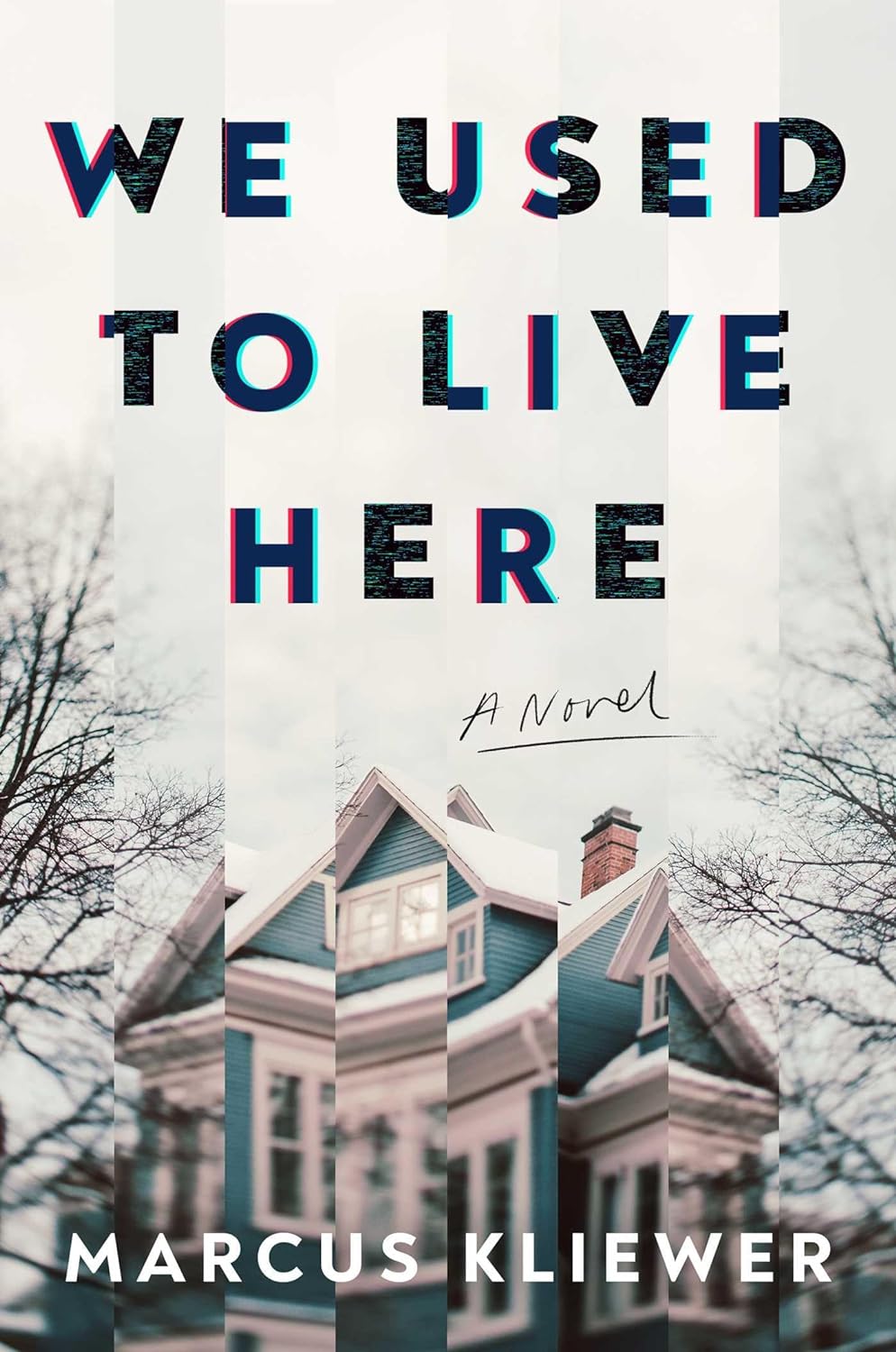
We Used to Live Here has an interesting premise for a horror story. A twist on a home invasion preying on social anxiety and the rules of politeness. A family is in your house. They haven’t hurt you or threatened you, but they won’t leave. What do you do? Sounds interesting, right?
This book isn’t about that.
I would be hard-pressed to tell you what this book is about. Things happen in it, certainly. Some of them are even scary. Some of them are things that, in other stories, I love! I love horror about twisted labyrinthine houses, places that want to consume you, buildings that hunt you through their corridors like a predator.
Unfortunately, this book isn’t about that either.
This was originally a short horror story and god, you can tell. The book is bloated with lengthy, irrelevant digressions that go nowhere and build to nothing, at its worst going on for pages at a time, as though the only way to establish character is to expose us to endless flashbacks and memories tangentially related to whatever is happening on page. I don’t need to know about your grandfather’s scary encounter with a great horned owl. I don’t need to know about fucking Mo.
But we need to fill out that word count, so the book spins its wheels for 200 pages between the intriguing opening and the deeply lackluster ending while we’re stuck with a main character who can barely string two thoughts together without an aside about how scared and useless she is. It is, fundamentally, a piece of short internet horror stretched over the skeleton of a novel until the skin splits and you can see the hollow interior.
And I say that as someone who likes internet horror! I think internet horror, like many forms of short fiction, thrives when it has one central, compelling idea that’s explored without overstaying its welcome. I think short horror in particular is about skillfully pulling some emotional levers in your brain and getting out right at the moment of that high. Scare them, hit them with the Bad End, and go.
But novels need things that short horror can sometimes do without. Like character development. And plot.
I think what was most frustrating to me about this book is that it draws on particular horror aesthetics—touchstones of the golden era of creepypasta and SomethingAwful image threads—mixes them together, and assumes that’s all a horror novel needs. A basement that’s bigger than it should be. A woman in a hospital gown. Swarms of ants. A ragged cymbals monkey (off brand!) But these things just kind of float vaguely near each other in the soup of the plot without becoming something more. There’s no moment where I went “a-ha! so THAT’S how it works!” Neither was there a moment where I was faced with a vast unknowable terror that forces you to admit to the horror of ignorance. Things happen. You shrug and say, “Might as well.”
Spoilers follow, reader beware.
The engine of the horror in the book seems to be—as far as I can tell—an interconnected series of parallel universes tied together by Old Houses, and the house the main character Eve and her girlfriend Charlie have purchased is one of these Old Houses. So is the cabin in the woods nearby. What cabin? Don’t worry, it isn’t important. What does this have to do with the family from the beginning of the book? Shockingly little. Thomas, the father, seems to be an ageless entity who pulls people through to parallel worlds, makes up a story about how they’re crazy, and then feeds off their terror. What about the rest of the family? I don’t know. Does this seem like a needlessly complicated mechanism for this scheme? Absolutely.
See, the novel is perpetually hinting at a larger, potentially more interesting world beyond Eve’s protracted spiral like it’s begging you to read through to the end, tempting you with explanations and revelations. There are none. The paratextual interludes drop in lore tidbits to try to establish the rules of a world that the main narrative is mostly not interested in. Here is a short list of things that are never explained and, worse, have no bearing on the story the book is ostensibly telling:
- There is an Old Man with a Scar in a cabin nearby. He has a bunch of nonsense maps that we are meant to assume chart the Old Houses (because House of Leaves!). There are classic “ritual pasta” instructions included within these maps for safe navigation. The Old Man’s scar is identical to the one Thomas has at the end of book.
- A list of terminology used by “Old House Archivists” differentiating between people trapped in the network, people who are visiting, and hostile entities that are there… for some reason. (Because SCP!)
- At one point Eve is trapped with a doppelganger of Charlie (I think?), and then later at the house she finds another Charlie trapped in the basement being invaded by otherworldly ants. At least one of these Charlies is fake. I don’t know where either of the came from. Charlie is fine at the end of the book.
- There is a forum thread about how a particular knock-off cymbals monkey, which Eve has cognitive behavioral therapy’d into the mouthpiece of her worst thoughts, actually doesn’t exist and never did and neither does the company that made them.
…Okay?
None of these things do a story make.
Eve does not noticeably change during any of this. She escalates from timidly letting the family into her home to killing Thomas’s wife, but not through overcoming any internal struggle. She kills Paige on accident. Charlie is barely a character despite how central she and their relationship are to Eve’s motivations. Thomas is almost interesting, until the reveal that he’s just a nosleep monster tormenting Eve for essentially no reason. The most interesting character is Thomas’s “sister” Alison, and honestly that’s only because I read the original short story.
Because that’s the thing: the short story is better! It doesn’t drag with irrelevant sidebars, there are no paratext documents trying desperately to justify the supernatural mechanism (there is still Morse code but that's nosleep for you), Charlie doesn’t disappear ⅔ into the story, and the motivations of Alison (or Abigail) are coherent and sympathetic. It works. I can see why people liked it.
I can’t say the same for the book.
———
Okay, a couple petty asides for me, too. I don’t know the author’s alphabet soup but he writes queer people like we, literally and without exaggeration, hear the word “religion” and get scared. I don’t know about you guys but I don’t think that’s how religious trauma works. And the religion thing, like many things in the book, culminates in—nothing. Boo.
Also, who the fuck edited this. That, isn’t, how, commas, work.
We Used to Live Here has an interesting premise for a horror story. A twist on a home invasion preying on social anxiety and the rules of politeness. A family is in your house. They haven’t hurt you or threatened you, but they won’t leave. What do you do? Sounds interesting, right?
This book isn’t about that.
I would be hard-pressed to tell you what this book is about. Things happen in it, certainly. Some of them are even scary. Some of them are things that, in other stories, I love! I love horror about twisted labyrinthine houses, places that want to consume you, buildings that hunt you through their corridors like a predator.
Unfortunately, this book isn’t about that either.
This was originally a short horror story and god, you can tell. The book is bloated with lengthy, irrelevant digressions that go nowhere and build to nothing, at its worst going on for pages at a time, as though the only way to establish character is to expose us to endless flashbacks and memories tangentially related to whatever is happening on page. I don’t need to know about your grandfather’s scary encounter with a great horned owl. I don’t need to know about fucking Mo.
But we need to fill out that word count, so the book spins its wheels for 200 pages between the intriguing opening and the deeply lackluster ending while we’re stuck with a main character who can barely string two thoughts together without an aside about how scared and useless she is. It is, fundamentally, a piece of short internet horror stretched over the skeleton of a novel until the skin splits and you can see the hollow interior.
And I say that as someone who likes internet horror! I think internet horror, like many forms of short fiction, thrives when it has one central, compelling idea that’s explored without overstaying its welcome. I think short horror in particular is about skillfully pulling some emotional levers in your brain and getting out right at the moment of that high. Scare them, hit them with the Bad End, and go.
But novels need things that short horror can sometimes do without. Like character development. And plot.
I think what was most frustrating to me about this book is that it draws on particular horror aesthetics—touchstones of the golden era of creepypasta and SomethingAwful image threads—mixes them together, and assumes that’s all a horror novel needs. A basement that’s bigger than it should be. A woman in a hospital gown. Swarms of ants. A ragged cymbals monkey (off brand!) But these things just kind of float vaguely near each other in the soup of the plot without becoming something more. There’s no moment where I went “a-ha! so THAT’S how it works!” Neither was there a moment where I was faced with a vast unknowable terror that forces you to admit to the horror of ignorance. Things happen. You shrug and say, “Might as well.”
Spoilers follow, reader beware.
The engine of the horror in the book seems to be—as far as I can tell—an interconnected series of parallel universes tied together by Old Houses, and the house the main character Eve and her girlfriend Charlie have purchased is one of these Old Houses. So is the cabin in the woods nearby. What cabin? Don’t worry, it isn’t important. What does this have to do with the family from the beginning of the book? Shockingly little. Thomas, the father, seems to be an ageless entity who pulls people through to parallel worlds, makes up a story about how they’re crazy, and then feeds off their terror. What about the rest of the family? I don’t know. Does this seem like a needlessly complicated mechanism for this scheme? Absolutely.
See, the novel is perpetually hinting at a larger, potentially more interesting world beyond Eve’s protracted spiral like it’s begging you to read through to the end, tempting you with explanations and revelations. There are none. The paratextual interludes drop in lore tidbits to try to establish the rules of a world that the main narrative is mostly not interested in. Here is a short list of things that are never explained and, worse, have no bearing on the story the book is ostensibly telling:
- There is an Old Man with a Scar in a cabin nearby. He has a bunch of nonsense maps that we are meant to assume chart the Old Houses (because House of Leaves!). There are classic “ritual pasta” instructions included within these maps for safe navigation. The Old Man’s scar is identical to the one Thomas has at the end of book.
- A list of terminology used by “Old House Archivists” differentiating between people trapped in the network, people who are visiting, and hostile entities that are there… for some reason. (Because SCP!)
- At one point Eve is trapped with a doppelganger of Charlie (I think?), and then later at the house she finds another Charlie trapped in the basement being invaded by otherworldly ants. At least one of these Charlies is fake. I don’t know where either of the came from. Charlie is fine at the end of the book.
- There is a forum thread about how a particular knock-off cymbals monkey, which Eve has cognitive behavioral therapy’d into the mouthpiece of her worst thoughts, actually doesn’t exist and never did and neither does the company that made them.
…Okay?
None of these things do a story make.
Eve does not noticeably change during any of this. She escalates from timidly letting the family into her home to killing Thomas’s wife, but not through overcoming any internal struggle. She kills Paige on accident. Charlie is barely a character despite how central she and their relationship are to Eve’s motivations. Thomas is almost interesting, until the reveal that he’s just a nosleep monster tormenting Eve for essentially no reason. The most interesting character is Thomas’s “sister” Alison, and honestly that’s only because I read the original short story.
Because that’s the thing: the short story is better! It doesn’t drag with irrelevant sidebars, there are no paratext documents trying desperately to justify the supernatural mechanism (there is still Morse code but that's nosleep for you), Charlie doesn’t disappear ⅔ into the story, and the motivations of Alison (or Abigail) are coherent and sympathetic. It works. I can see why people liked it.
I can’t say the same for the book.
———
Okay, a couple petty asides for me, too. I don’t know the author’s alphabet soup but he writes queer people like we, literally and without exaggeration, hear the word “religion” and get scared. I don’t know about you guys but I don’t think that’s how religious trauma works. And the religion thing, like many things in the book, culminates in—nothing. Boo.
Also, who the fuck edited this. That, isn’t, how, commas, work.